
Partial Discharge (PD) is the “silent killer” of high-voltage assets. However, not all PD signals are the same. To capture these elusive threats, understanding the partial discharge frequency range is crucial for every power engineer.
1. The Multi-Band Challenge
PD signals manifest across a vast electromagnetic and acoustic spectrum. Relying on a single-frequency sensor is like trying to see the world in one color. Our latest handheld PD detector is designed to bridge this gap with Full-Spectrum Coverage:
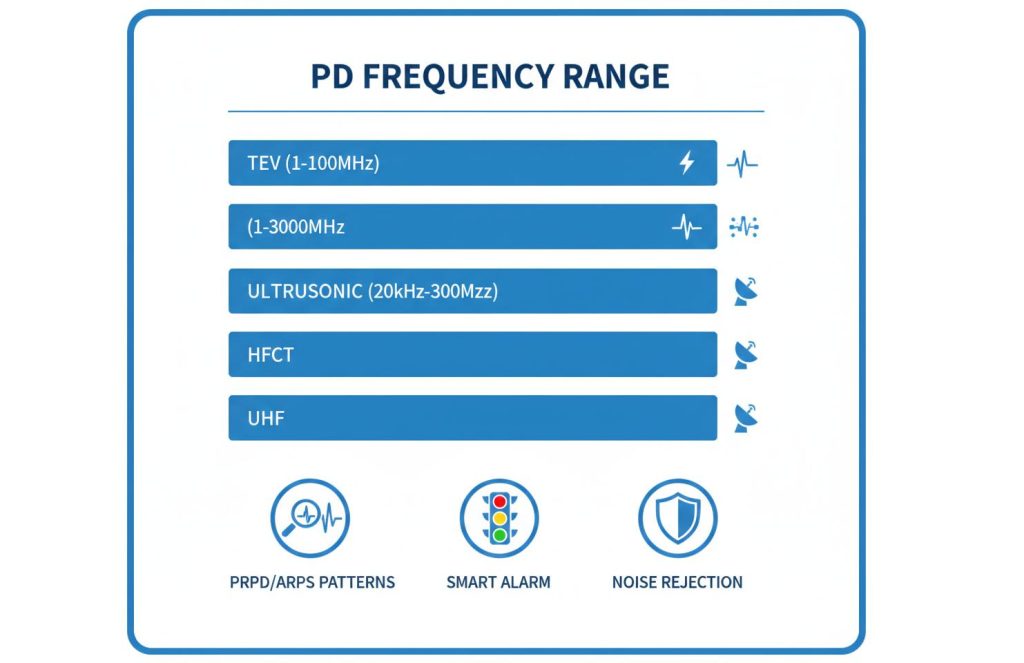
- TEV (Transient Earth Voltage): Operates in the 1 – 100MHz range, ideal for detecting internal discharge in metal-clad switchgear.
- Ultrasonic (AA & AE): Covers 40kHz (Non-contact) and 20 – 300kHz (Contact). Perfect for identifying surface tracking and corona discharge through acoustic signatures.
- HFCT (High-Frequency Current Transformer): Captures signals from 0.5 – 30MHz, the gold standard for cable and transformer PD monitoring.
- UHF (Ultra-High Frequency): Reaches 300 – 1500MHz, providing superior anti-interference capabilities for GIS (Gas Insulated Switchgear) testing.
2. Why Frequency Precision is Key?
A precise partial discharge frequency range allows for “Noise Rejection.” Our device features built-in algorithms to distinguish between background EMI and actual insulation defects. For instance, the UHF band (up to 1.5GHz) allows engineers to bypass common low-frequency noise found in busy industrial environments.
3. Smart Diagnosis: Beyond Just Frequency
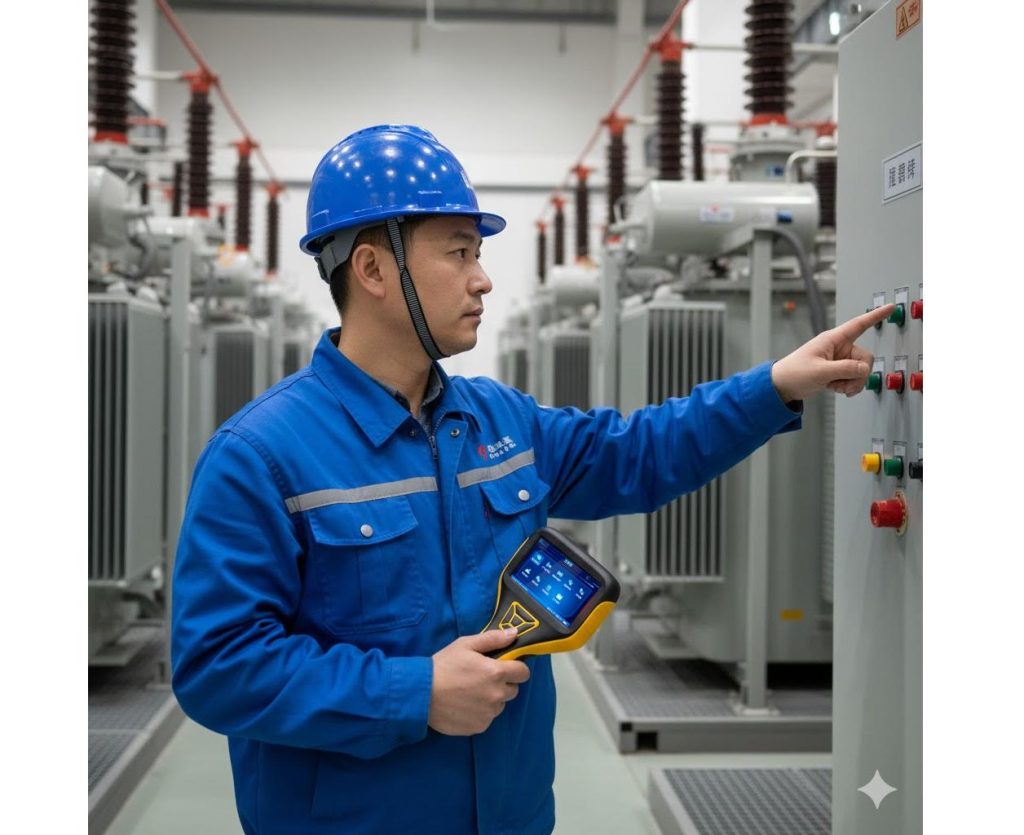
Identifying the frequency is only the first step. Our handheld unit integrates:
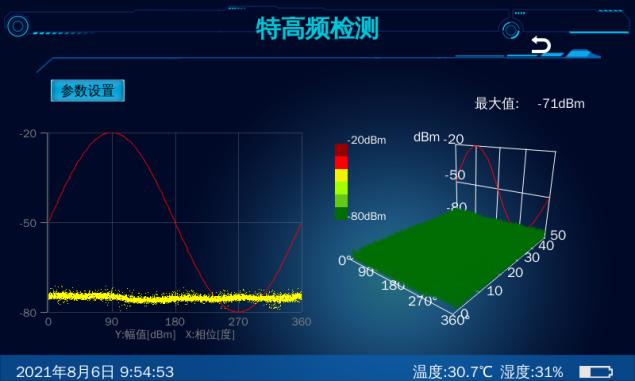
- PRPD & PRPS Patterns: Visualize the discharge phases to determine if it’s point, floating, or surface discharge.
- Real-time Waveforms: Switch between mV and dB values instantly to assess severity.
- Intelligent Alarms: Uses a Traffic Light system (Red, Yellow, Green) to provide immediate site safety indicators.
Conclusion
When selecting a PD detector, don’t settle for limited bandwidth. Ensure your tool covers the entire partial discharge frequency range to guarantee the longevity of your GIS, switchgear, and transformers.