
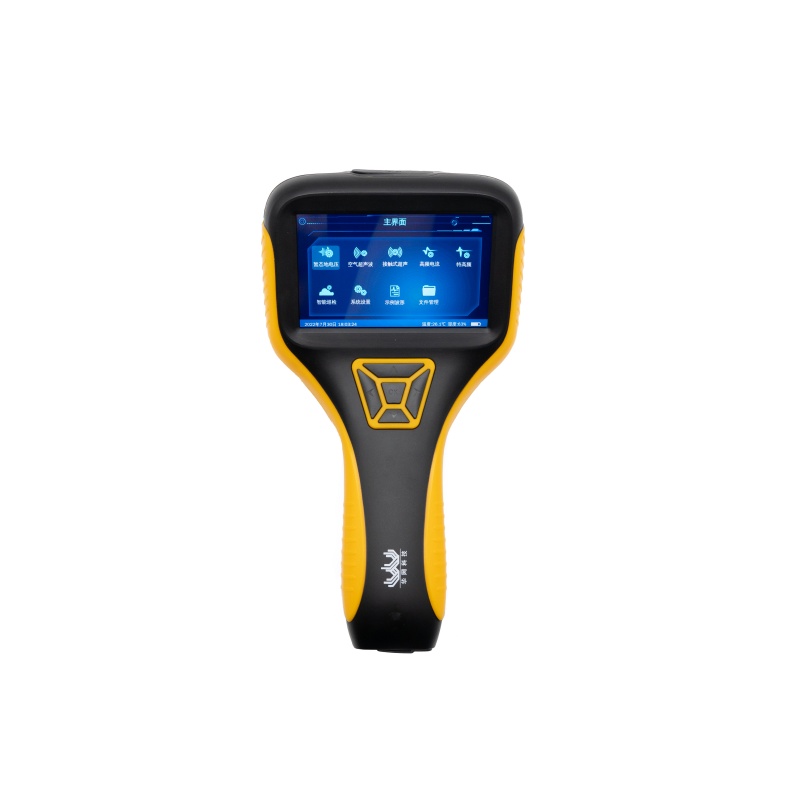
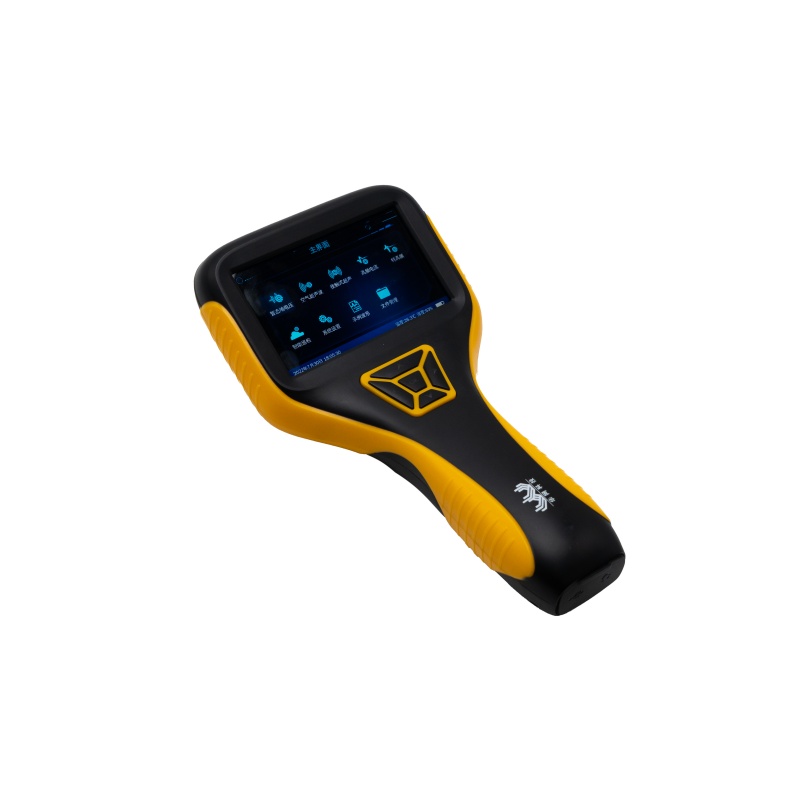
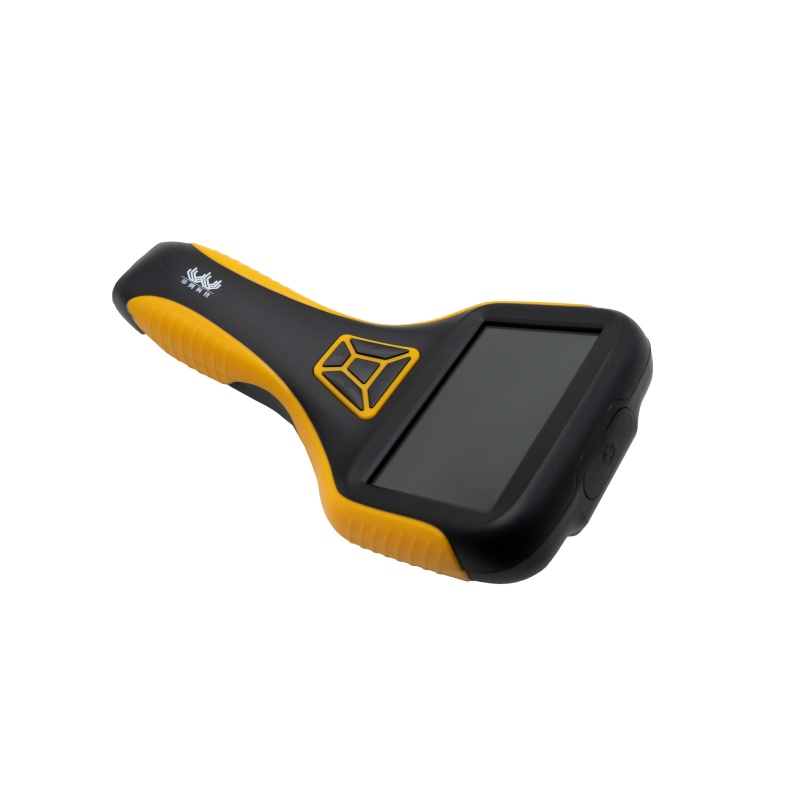
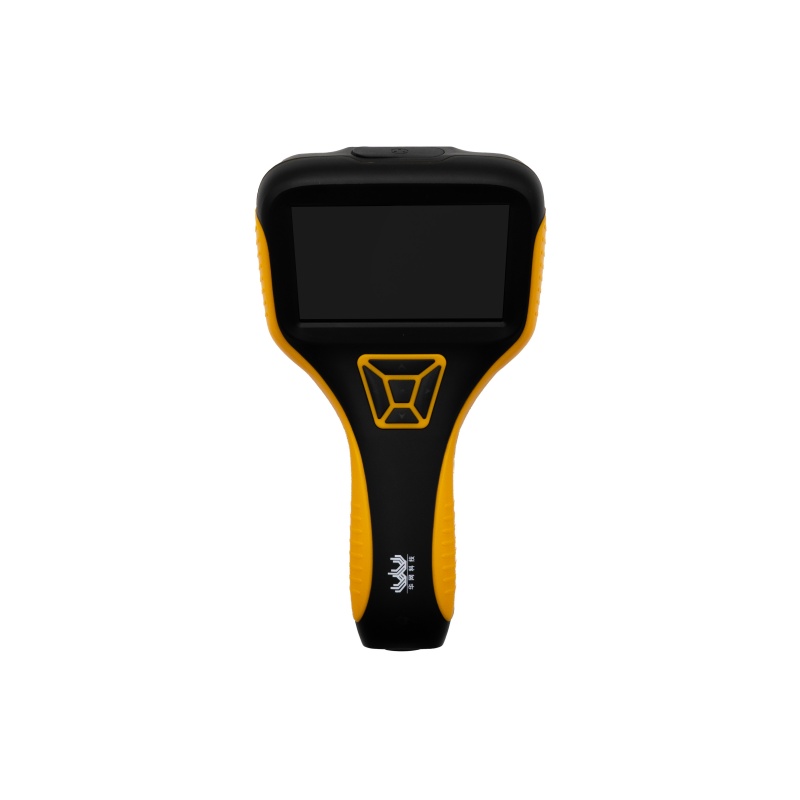
Model: HMJ9001-Q
Product Overview:
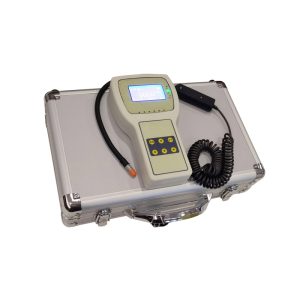
The HMJ9001-Q Partial Discharge Detector is a multifunctional handheld device that utilizes five advanced detection methods—Transient Earth Voltage (TEV), Ultrasonic, High-Frequency Current (HFCT), and Ultra High Frequency (UHF)—to detect partial discharge (PD) conditions in various power equipment.
It is widely applicable to equipment such as switchgear, ring main units (RMU), GIS, power cables, transformers, and overhead lines.
- TEV sensors are used for switchgear and RMU detection.
- Airborne ultrasonic sensors are used for switchgear, RMU, and overhead lines.
- Contact ultrasonic sensors are used for transformers and GIS.
- HFCT sensors are used for transformers and cables.
- UHF sensors are used for transformers and GIS.
The instrument is compact, lightweight, easy to use, and highly efficient for field detection.
The HMJ9001-Q can connect with power grid PMS platforms via USB, Wi-Fi, or Bluetooth to download work orders and upload test data.
Key Features:
- 5-inch 800×480 touch screen display
- Communication interfaces: USB, Bluetooth, Wi-Fi, NFC
- Automatic partial discharge fault diagnosis
- Built-in library of typical PD pattern maps
- PRPD and PRPS pattern analysis supported
- Supports saving and playback of time-domain and pattern data
Core Functions:
- Integrates five types of sensors: TEV, airborne ultrasonic, contact ultrasonic, HFCT, and UHF
- Detects the frequency and intensity of TEV, ultrasonic, HFCT, and UHF PD signals
- Over-limit alarm function with red, yellow, and green indicators to show PD severity
- Ultrasonic detection uses external method, stereo pickup, and noise reduction to listen to discharge signals
- Playback and comparison of historical audio data
- PRPD and PRPS modes for discharge type identification
- Time-domain waveform detection mode for identifying typical discharge waveforms
- Storage and comparison of typical discharge pattern maps
- Equipped with data management software for comprehensive analysis and automatic report generation
Technical Specifications:
| Parameter | Specification |
| Time-domain waveform | 20ms raw time-domain waveform |
| Spectrum display | PRPD and PRPS patterns, typical waveform integration |
| Data storage | Supports time-domain and spectrum data saving and review |
| Audio recording time | Adjustable from 10s to 120s |
| Audio volume | 1–10 levels adjustable |
| Operating system | Embedded Linux |
| Communication | USB, Wi-Fi, Bluetooth, NFC |
| Screen resolution | 800×480 |
| Battery life | >8 hours |
| Internal storage | 16GB |
Frequently Asked Questions about handheld partial discharge detector
What is the handheld partial discharge detector (HMJ9001-Q) used for?
The handheld partial discharge detector — model HMJ9001-Q is designed for periodic live-line partial discharge inspection and fault locating. It is deployed in substations, distribution rooms, cable tunnels and industrial plants, where it gives maintenance teams continuous or periodic visibility of insulation condition so that defects can be identified before they develop into unplanned outages.
What is the screen resolution of the HMJ9001-Q?
According to the published specification, the screen resolution is 800×480. This figure is measured under the reference conditions stated in the product datasheet; for project-specific acceptance criteria please refer to the type test report supplied with the quotation.
Is this detector suitable for periodic inspection rather than permanent monitoring?
Yes. The HMJ9001-Q is a portable instrument intended for periodic live-line surveys: an inspector walks the switchgear or cable route, takes readings at defined test points, and compares them against the historical trend for the same point. This approach is the standard complement to permanent online monitoring — it covers a large number of assets at low cost and identifies the few units that justify a permanently installed monitor.
How is the handheld partial discharge detector powered and how does it communicate?
The HMJ9001-Q uses the following interface configuration: communication is USB, Wi-Fi, Bluetooth, NFC; power supply is >8 hours. This allows the same device to be fitted in both retrofitted installations and new builds; the exact combination is confirmed at order stage against the site communication architecture.
Is installation possible without an outage?
In most cases yes. Because the handheld partial discharge detector is installed on the equipment while it remains energised, the work is normally carried out as a live-line operation by qualified personnel following the site safety rules. Where a sensor must be coupled to an earthed screen, bonded connection or gas compartment, a short outage may be required — this is confirmed during the site survey.
Does HUWOR support OEM/ODM and what is the delivery lead time?
Yes. Zhuhai Huawang Technology Co., Ltd. supplies the handheld partial discharge detector under its own brand and also supports OEM/ODM supply, including private labelling, custom firmware functions and integration with the customer’s monitoring platform. Standard units are typically quoted with a lead time confirmed at order stage depending on quantity and configuration; sample and pilot orders are supported.
Applications
The handheld partial discharge detector is used for periodic live-line partial discharge inspection and fault locating. Typical installation sites include substations, distribution rooms, cable tunnels and industrial plants. It is applied both on new assets, where the monitoring function is built into the asset from the start, and on existing assets where it is retrofitted to extend the information available to the maintenance team.
How it works
The instrument converts the physical quantity of interest into an electrical signal, conditions and digitises that signal in the field unit, and passes the result to the monitoring platform or to the operator. Condition assessment relies on the trend rather than on a single reading: the value recorded today is compared with the commissioning value and with the historical series for the same measurement point, and it is the direction and rate of change that indicate whether the asset is degrading.
Installation and commissioning
Installation follows three steps: a site survey to confirm the mounting position, the communication path and the power arrangement; mechanical fitting of the sensor or the use of the instrument on the test point; and finally commissioning, where the readings are verified against a reference and the alarm thresholds are set.
For this model the relevant interface conditions are: communication USB, Wi-Fi, Bluetooth, NFC.
Standards and documentation
Type test reports, calibration certificates and installation documentation are provided with the supply. Where a project requires the equipment to be verified against a specific national or utility standard, the applicable clauses should be stated in the enquiry so that the test scope can be confirmed at quotation stage.
Reviews
There are no reviews yet.