
In the realm of high-voltage engineering and electrical insulation maintenance, Partial Discharge (PD) is a critical phenomenon that can signal the beginning of equipment failure. However, for many technicians and engineers, one question often arises: What is the unit of partial discharge?
Understanding the unit used to measure these tiny electrical sparks is essential for diagnosing the health of transformers, switchgear, and cables. In this article, we’ll explore the standard unit of partial discharge, why it’s used, and what it tells us about electrical insulation.
What is the Unit of Partial Discharge?
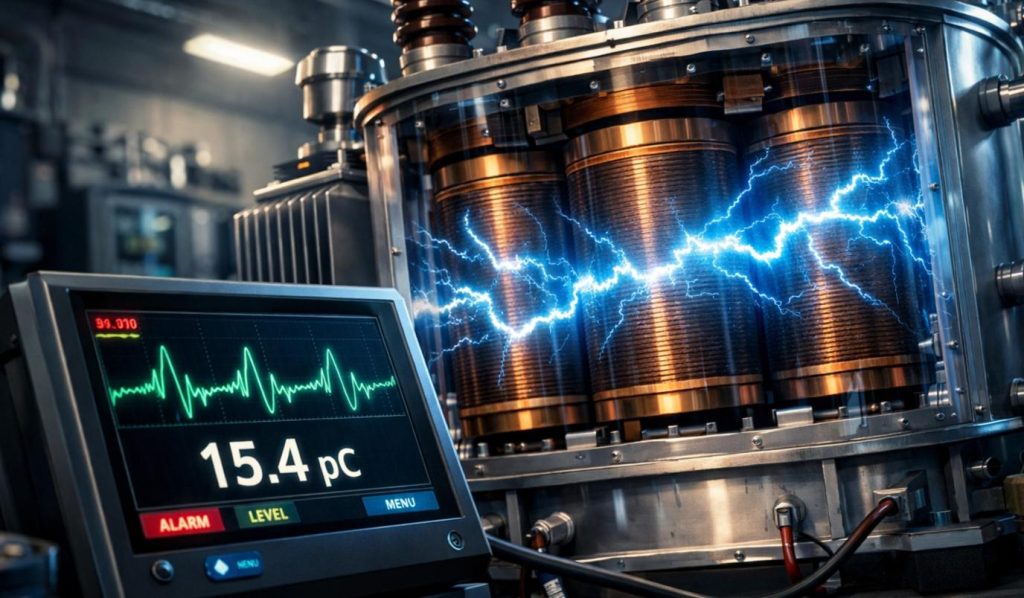
The standard unit of measurement for partial discharge is the picoCoulomb (pC).
To understand this unit, we first need to look at the Coulomb (C), which is the International System (SI) unit for electric charge. One Coulomb is a significant amount of charge, representing about 6.242 × 10¹⁸ electrons.
Because partial discharge events involve extremely small amounts of energy and charge, the Coulomb is far too large for practical measurement. This is where the picoCoulomb comes in.
Breaking Down the picoCoulomb (pC)
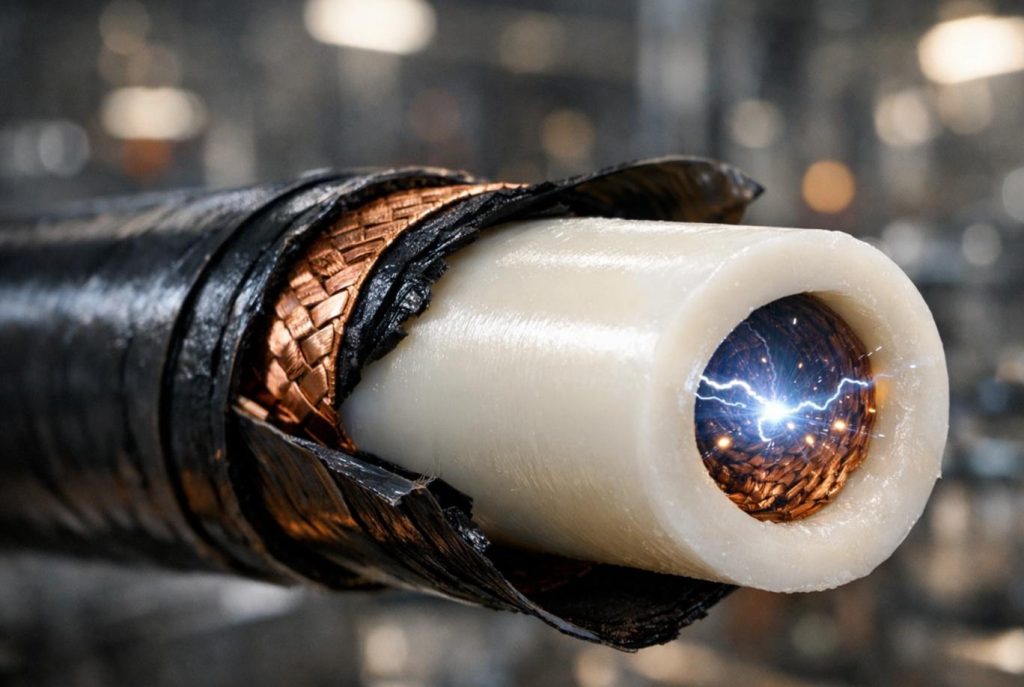
A picoCoulomb (pC) is one-trillionth of a Coulomb (10⁻¹² C). This tiny unit is used because PD events are localized, microscopic breakdowns within an insulation system. Even though the charge is small, these repetitive discharges can gradually erode insulation, eventually leading to a complete dielectric breakdown and catastrophic equipment failure.
Apparent Charge: The Concept Behind the Unit
When we talk about the unit of partial discharge, we are technically measuring what is known as apparent charge.
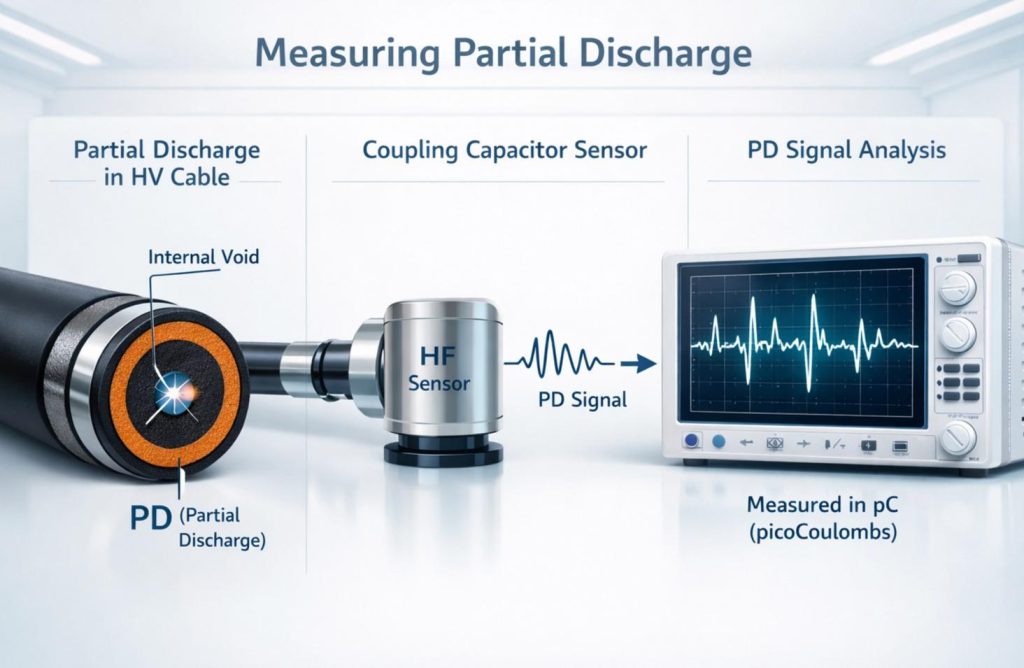
It is important to note that a PD event happens deep within the insulation. It is impossible to measure the actual charge at the site of the discharge without destroying the equipment. Instead, sensors measure the charge that is “seen” at the terminals of the equipment. This is why the value in pC is referred to as the apparent charge—it represents the charge that, if injected between the terminals, would produce the same voltage pulse as the internal discharge.
Why is PD Measured in pC?
Using picoCoulombs as the standard unit of partial discharge allows engineers to:
- Quantify Severity: A higher pC value generally indicates a more severe discharge or a larger defect within the insulation.
- Trend Analysis: By monitoring the pC levels over time, maintenance teams can identify if the insulation is degrading.
- Standardization: International standards, such as IEC 60270, provide guidelines for measuring PD in pC, ensuring consistency across different testing equipment and manufacturers.
How is Partial Discharge Measured?
Measuring PD in pC requires specialized, high-sensitivity equipment. The process typically involves:
- Coupling Capacitors: These are used to capture the high-frequency pulses generated by PD events.
- PD Detectors: These instruments filter out noise and amplify the tiny signals, converting them into a measurable pC value.
- Calibration: Before testing, a known charge (e.g., 10 pC or 100 pC) is injected into the system to calibrate the equipment, ensuring the readings are accurate.
Conclusion
The unit of partial discharge, the picoCoulomb (pC), is more than just a technical specification. it is a vital metric for the predictive maintenance of high-voltage assets. By understanding that 1 pC represents a microscopic but potentially destructive electrical event, engineers can better interpret test results and take action before a minor insulation defect turns into a major power outage.
Whether you are performing a routine inspection or diagnosing a specific fault, keeping an eye on the pC levels is the key to ensuring the long-term reliability of your electrical infrastructure.