In the world of high-voltage engineering, silence is often deceptive. Beneath the hum of a functioning switchgear or power cable, a hidden phenomenon known as Partial Discharge (PD) could be silently eroding your infrastructure.
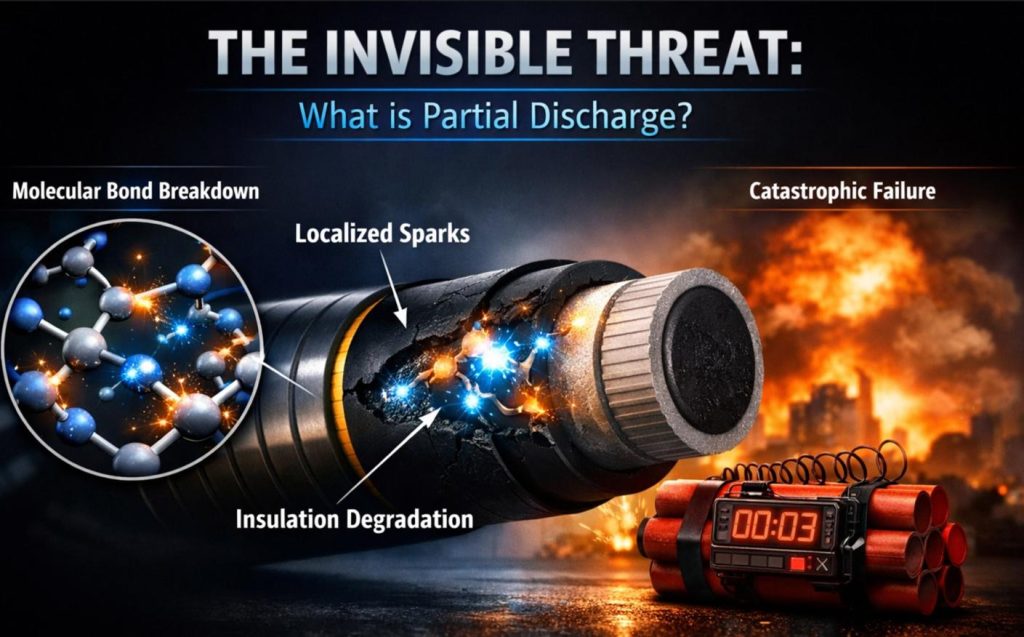
The Invisible Threat: What is Partial Discharge?
Partial Discharge occurs when the local electric field strength exceeds the breakdown strength of the insulation (gas, liquid, or solid), leading to localized sparks that do not fully bridge the gap between conductors.
While a minor discharge might seem negligible, it is a ticking time bomb. High-energy electrons break down molecular bonds within the insulation, creating a destructive cycle of degradation. Left unchecked, PD inevitably leads to insulation failure, resulting in catastrophic explosions, fires, and unplanned outages.
The Multi-Sensory Approach to Detection
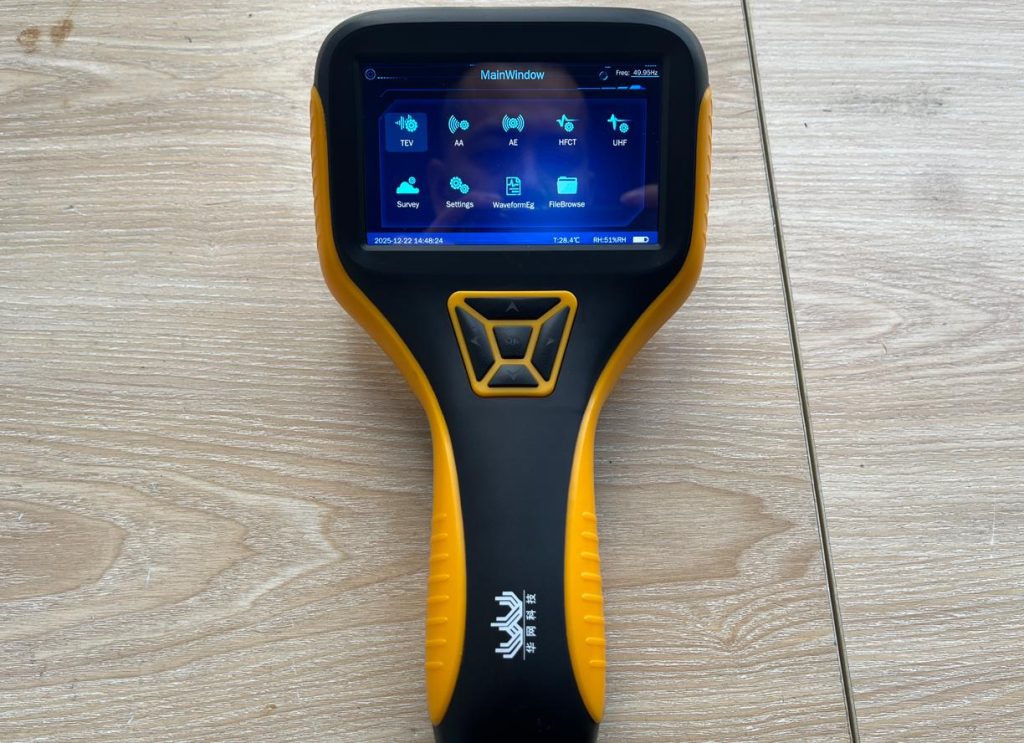
Modern electrical assets are complex. A “one-size-fits-all” detection method is no longer sufficient. Our latest Multi-Functional PD Detector integrates four cutting-edge technologies to provide a 360-degree view of your equipment’s health:
1. TEV: The Pulse of the Chassis
First identified by Dr. John Reeves, Transient Earth Voltages (TEV) are high-frequency pulses (1-100MHz) that escape through gaps in the metal cladding of switchgears. By capturing these pulses, our device identifies internal defects without requiring a shutdown, making it ideal for routine inspections.
2. Ultrasonic: Hearing the Unheard
PD events emit acoustic waves. Our system utilizes precision Ultrasonic Sensors (centered at 40kHz) to detect the “sizzling” sound of surface discharges. Because ultrasonic waves are immune to electromagnetic interference, they provide crystal-clear diagnostics for surface-level tracking and arcing.
3. HFCT: Precision for Power Cables
Cable joints and terminations are notoriously vulnerable. By utilizing High-Frequency Current Transformers (HFCT) on grounding lines, we capture the high-frequency pulses traveling through the distributed capacitance of the cable. This allows for the early detection of insulation breakdown before a cable fault can paralyze your network.
4. UHF: The Gold Standard in Sensitivity
For the most demanding environments, the Ultra-High-Frequency (UHF) method monitors signals in the 300MHz to 3GHz range. By operating at frequencies far above common corona interference, UHF provides unmatched sensitivity and allows for precise fault localization and defect type identification.
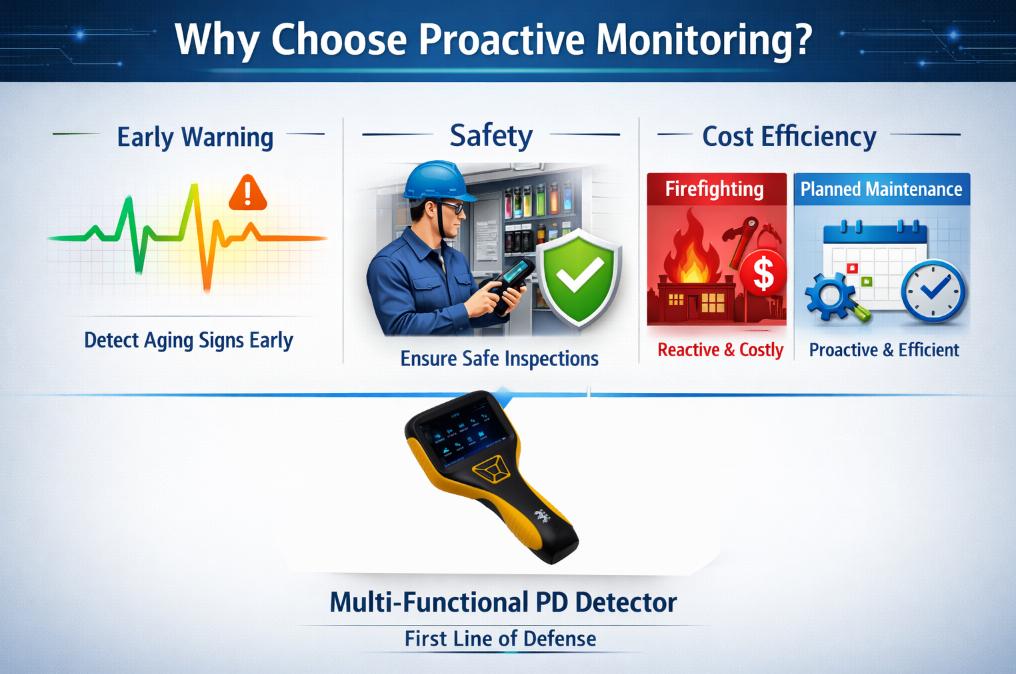
Why Choose Proactive Monitoring?
- Early Warning: PD is the primary precursor to mechanical aging and thermal breakdown.
- Safety: Identify risks before they lead to hazardous equipment failure.
- Cost Efficiency: Move from reactive “firefighting” to planned, predictive maintenance.
Don’t wait for the flashover. Equip your team with the intelligence needed to see the invisible and hear the silent. Our Multi-Functional PD Detector is your first line of defense in a resilient, modern power grid.