
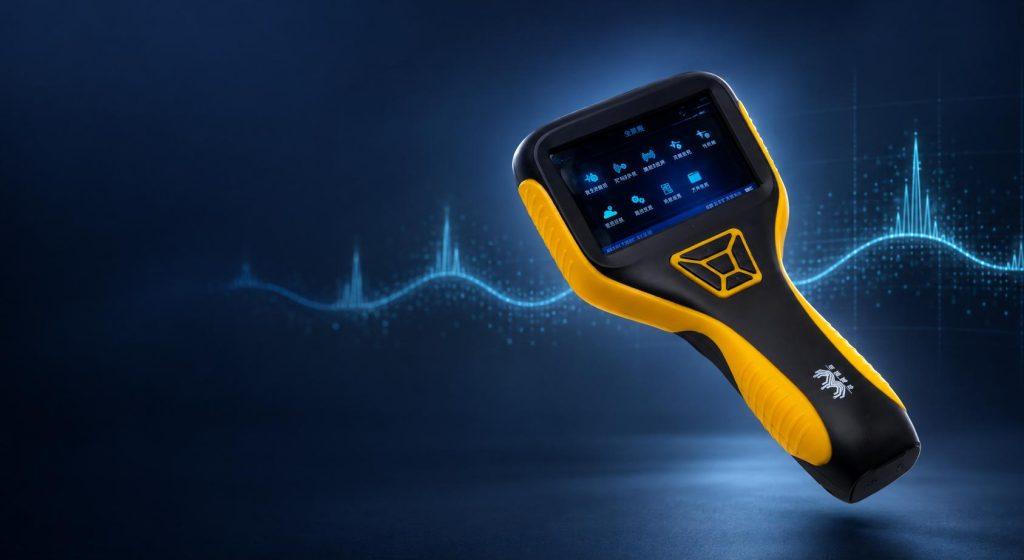
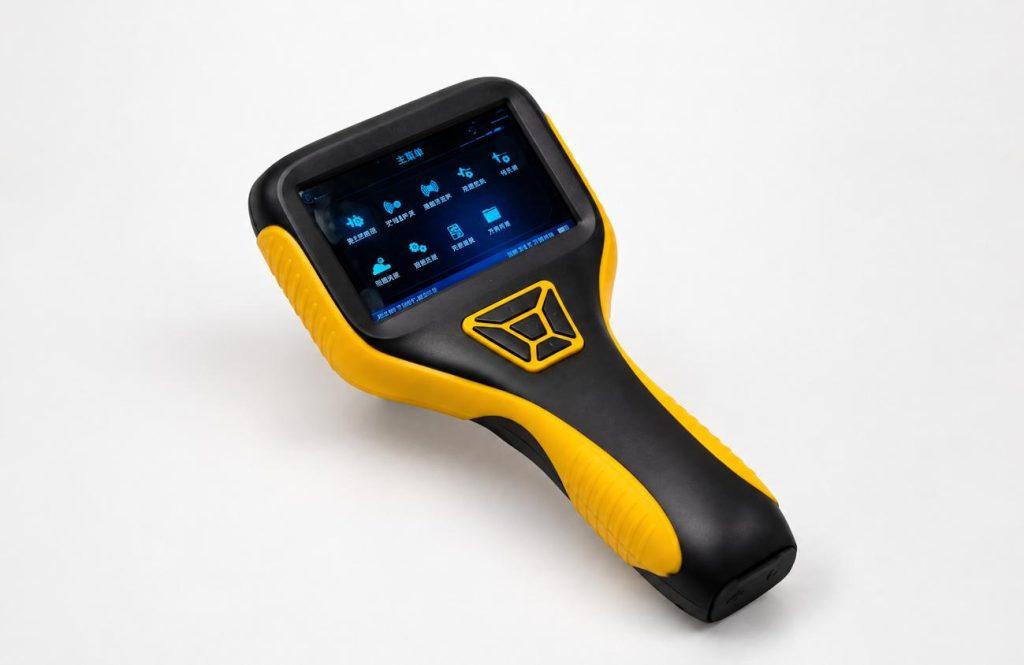
A partial discharge analyzer helps electrical maintenance and test teams detect and assess partial discharge (PD) activity in high-voltage equipment. Zhuhai Huawang Technology’s multifunctional partial discharge analyzer brings together four detection approaches—transient earth voltage (TEV), ultrasonic, high-frequency current (HFCT) and ultra-high frequency (UHF)—in a portable instrument. With the appropriate sensor configuration, it can be used to inspect switchgear, ring main units, gas-insulated switchgear (GIS), power cables, transformers and overhead lines.
The choice of detection method depends on the equipment, access conditions and the type of signal that can be measured. Using more than one method can help technicians compare observations and investigate suspected insulation defects; measurement results should still be interpreted by trained personnel in the context of site conditions and other test data.
What is a partial discharge analyzer?
A partial discharge analyzer is an instrument that detects and analyzes signals associated with localized electrical discharges in an insulation system. Partial discharge does not initially create a complete conductive path between conductors, but recurring activity can contribute to insulation deterioration. PD may produce electrical pulses, acoustic signals and electromagnetic emissions, which is why different sensors can be used to detect it.
A PD analyzer is not simply a pass/fail tester. Depending on its measurement method and features, it may display signal amplitude, pulse activity, time-domain waveforms and phase-resolved patterns. These results provide information for inspection and diagnosis, but a single reading should not be treated as a definitive prediction of equipment failure.
Four detection methods in one instrument
The Zhuhai Huawang Technology multifunctional partial discharge analyzer supports four PD detection methods. The manual describes built-in TEV and non-contact ultrasonic sensors, while contact ultrasonic, HFCT and UHF sensors are external accessories. Sensor availability depends on the instrument configuration; confirm the selected model and accessory package before ordering.
1. Transient earth voltage (TEV)
A TEV sensor detects transient voltage pulses that appear on the exterior of metal-enclosed equipment when high-frequency signals from a discharge couple through discontinuities or openings in the enclosure. The manual identifies switchgear and ring main units as typical TEV inspection targets. TEV is useful for routine screening, but signals from nearby electrical or electronic equipment may cause interference, so suspicious results may require confirmation using another method.
The instrument’s stated TEV frequency range is 1–100 MHz, with a measurement range of 0–65 dBmV. Available display modes include amplitude readings, time-domain waveforms and phase-resolved PD patterns (PRPD and PRPS).
2. Non-contact and contact ultrasonic detection
Ultrasonic sensors detect acoustic signals associated with discharge activity. The built-in non-contact sensor is intended for inspection of equipment such as switchgear, ring main units and overhead lines. Contact ultrasonic sensors are listed for applications including GIS and transformers; the manual distinguishes sensor variants for gas-filled and oil-filled equipment.
The manual gives a resonant frequency of 40 kHz for the non-contact ultrasonic sensor and a measurement range of −10 to 75 dBμV. For contact ultrasonic detection, it lists a frequency range of 20–300 kHz. Ultrasonic testing can be useful where electromagnetic interference is a concern, but signal transmission and attenuation depend on enclosure design, surface contact and the discharge location. An internal source may not be detectable if the acoustic path is blocked or strongly attenuated.
3. High-frequency current (HFCT)
An HFCT sensor detects high-frequency current pulses flowing through a conductor, cable screen or grounding connection. The manual describes HFCT inspection for power cables, including cable joints and terminations. The stated measurement frequency range is 0.5–30 MHz, with a measurement range of 0–65 dBmV.
Correct sensor placement and grounding-path access are important. The measurement setup should follow the instrument instructions and the site’s safety procedures.
4. Ultra-high frequency (UHF)
A UHF sensor detects electromagnetic signals associated with fast PD pulses. The manual lists GIS and transformers as typical UHF applications. The instrument’s stated UHF frequency range is 300–1500 MHz, with a measurement range of −80 to −20 dBm.
UHF measurements provide a different view of PD activity from TEV, ultrasonic or HFCT measurements. The useful sensor position and signal level depend on equipment construction, sensor coupling and the measurement environment.
Analysis, display and inspection records
The analyzer offers amplitude, time-domain and phase-resolved display modes for supported detection methods. Depending on the sensor and selected mode, technicians can review signal levels, waveforms, pulse counts and PRPD/PRPS patterns. The manual also describes configurable thresholds and algorithms intended to help distinguish discharge activity from interference. These tools support assessment; they do not eliminate the need for appropriate test setup and professional interpretation.
For inspection programs, the data-management function can record environmental conditions, background noise and test readings. The manual states that data can be saved or uploaded and reports generated when the analyzer is used with the companion PC software. Confirm the required software and workflow for the selected configuration.
The instrument is specified with an 8,000 mAh lithium-polymer battery and at least 8 hours of continuous operating time. Its stated dimensions are 267 × 150 × 80 mm, and the main unit weighs no more than 0.8 kg. These portable form-factor specifications can be useful for field inspection routes; actual operating time may vary with use and conditions.
Typical applications
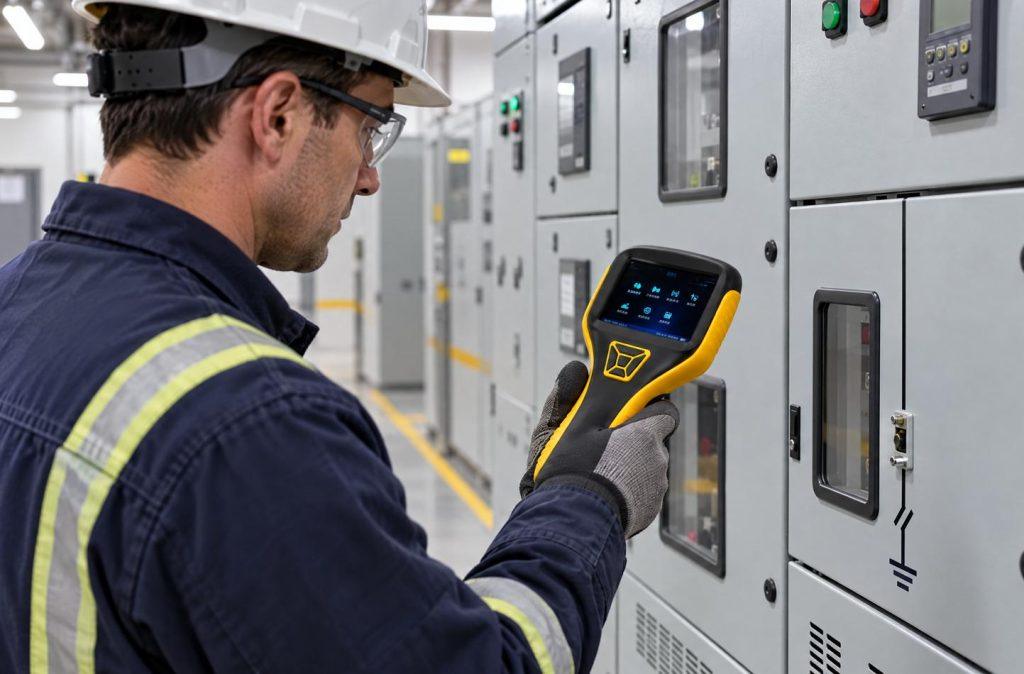
With the relevant sensor attached, the analyzer can be applied to:
- Switchgear and ring main units: TEV and non-contact ultrasonic inspection.
- GIS: contact ultrasonic or UHF inspection, depending on access and configuration.
- Power cables: HFCT inspection at accessible grounding connections, joints or terminations.
- Transformers: contact ultrasonic or UHF inspection, subject to sensor setup and equipment access.
- Overhead lines: non-contact ultrasonic inspection where the method is suitable for the site.
These are application examples described in the product manual, not a guarantee that every defect can be detected in every asset. Detection capability depends on defect characteristics, sensor choice, access, background interference and test conditions.
How to choose a partial discharge analyzer
Before selecting a partial discharge analyzer, identify the equipment you need to inspect and whether the work is routine screening, troubleshooting or a more detailed diagnostic test. Then check which measurement methods and sensors are needed for that equipment. A multi-method device can offer flexibility across asset types, but the included and optional accessories should be confirmed for the exact instrument version.
Also compare the frequency ranges and measurement ranges with your intended application. Review whether the analyzer supports the views and records your team needs, such as time-domain waveforms, PRPD/PRPS patterns, background-noise logging and PC-generated reports. Finally, verify the operating instructions, calibration or verification requirements, software compatibility and applicable test procedures for your project.
IEC 60270:2025 covers charge-based measurement of partial discharges for electrical apparatus tested with AC voltages up to 500 Hz or DC. The product manual supplied for this article lists Chinese standards and does not state that this analyzer complies with IEC 60270. If IEC 60270 compliance or apparent-charge measurement is a project requirement, ask the manufacturer to confirm the specific model’s documented capability and evidence before making a purchasing decision. IEC 60270:2025
Why consider Zhuhai Huawang Technology?
Zhuhai Huawang Technology offers a handheld, multifunctional partial discharge detection instrument that combines TEV, ultrasonic, HFCT and UHF measurement options. Its documented features include multiple signal display modes, configurable thresholds, data-management functions used with companion PC software, and a lightweight main unit. For buyers comparing PD analyzers, the practical next step is to match the required sensors and measurement ranges to the equipment and inspection workflow.
Contact Zhuhai Huawang Technology to confirm the available instrument configuration, included sensors, PC software requirements, technical specifications and support for your target assets.
Frequently asked questions
What does a partial discharge analyzer detect?
It detects signals associated with localized discharge activity in electrical insulation. Depending on the instrument and sensor, these signals may be measured as transient voltage, acoustic waves, high-frequency current pulses or UHF electromagnetic emissions.
Which assets can this multifunctional PD analyzer inspect?
The product manual lists switchgear, ring main units, GIS, power cables, transformers and overhead lines. The suitable method and sensor depend on the asset and the instrument configuration.
Does the analyzer support online partial discharge testing?
The manual describes field inspection methods and applications on electrical equipment, but it does not explicitly define an online-monitoring system or continuous permanent monitoring capability. Confirm with Zhuhai Huawang Technology whether your intended energized inspection procedure is supported for the specific instrument and sensor.
Does this product comply with IEC 60270?
The supplied manual does not claim IEC 60270 compliance. IEC 60270:2025 focuses on charge-based PD measurement under specified AC or DC test conditions. Request model-specific documentation from the manufacturer if compliance is required.
Are all sensors included with the analyzer?
No. The manual lists built-in TEV and non-contact ultrasonic sensors and identifies contact ultrasonic, HFCT and UHF sensors as external accessories. Availability varies by configuration, so confirm the quotation and accessory list.
Can the instrument generate inspection reports?
The manual describes automatic data saving, uploading and report generation through companion PC software. Confirm the software requirements and report formats for the version you plan to purchase.