
Introduction:
For any facility manager or power grid engineer, nothing is more stressful than an unexpected high-voltage (HV) equipment failure. Even with routine preventive maintenance (PM) schedules, catastrophic insulation breakdowns can seemingly occur out of the blue. The truth is, most major failures are preceded by a series of tiny, silent warnings—a phenomenon known as Partial Discharge (PD). Today, we delve into the essential technology designed to capture these vital signs: the Partial Discharge Monitoring Device.
Section 1: The Invisible Threat Lurking Inside HV Equipment
What exactly is PD? Simply put, it is a localized dielectric breakdown within a small area of an insulation system under high-voltage stress. Think of it as a “termite” slowly eating away at the insulation’s integrity.
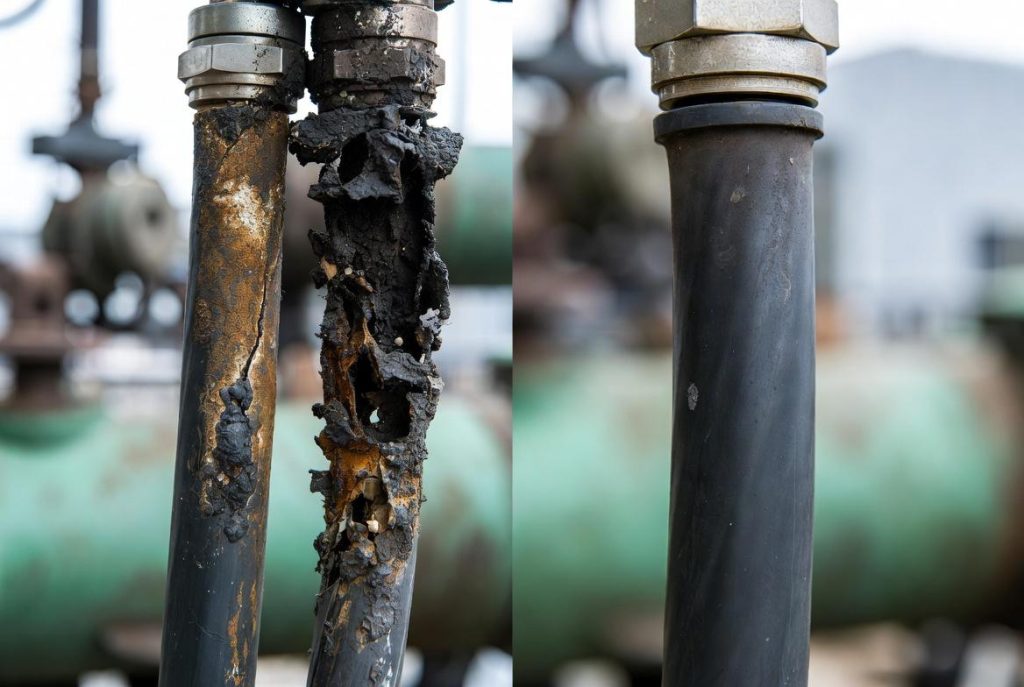
PD might be caused by manufacturing defects, air voids, or stress concentration. While minuscule initially, these discharges erode the insulation over time, creating carbonized channels. If left unchecked, the PD eventually escalates, leading to full dielectric breakdown, costly equipment failure, and potential safety hazards.
Section 2: Why Annual Inspection is No Longer Enough
Relying solely on periodic shutdown tests (offline testing) presents two major blind spots in managing HV assets:
- The Time Gap: Your equipment’s health is only known for a fleeting moment during the test. For the remaining 364 days, any rapidly developing fault goes unnoticed.
- The Operational Blind Spot: Many PD activities only manifest under specific operating conditions—such as peak load, high humidity, or temperature spikes—conditions that are often absent during planned shutdowns.
This is why implementing an online Partial Discharge Monitoring Device is critical. It transforms maintenance from reactive or periodic to Predictive Maintenance (PdM), providing a continuous, 24/7 “ECG” of your critical assets.
Section 3: The Critical Guide to Selecting the Right PD Monitor
The market is flooded with manufacturers offering various Partial Discharge Monitoring Devices. For those new to the field, navigating the options can feel like a minefield. Based on years of industry experience, here are the three critical factors to help you avoid common pitfalls and make a sound investment:
1. Noise Rejection is Non-Negotiable
This is arguably the most crucial factor. Industrial environments are electrically “noisy,” full of interference from cell signals, inverters, VFDs (Variable Frequency Drives), and welding equipment.
A poor-quality PD device will constantly flag these external noises as internal faults (false alarms). If the system cries “wolf” daily, operators will eventually lose faith and switch it off.
The Solution: Prioritize devices with advanced hardware filtering and sophisticated software algorithms capable of identifying and isolating true PD signatures from ambient electrical noise.
2. Technical Stability and Experience Matter
The accuracy of a PD monitor is fundamentally tied to its diagnostic algorithms. These algorithms require years of field testing, data collection, and refinement across thousands of real-world fault waveforms to be reliable.
When evaluating vendors, look for those with a deep history and unwavering focus on the utility and grid sector. Companies like Zhuhai Huawang Technology, for example, have built a strong reputation by focusing on developing stable, mature algorithms over many years of specialized data accumulation. This specialized technical focus often translates into a lower false alarm rate and more accurate fault classification than general-purpose manufacturers.
3. Simplicity and Actionable Diagnostics
The device must be user-friendly. An ideal Partial Discharge Monitoring Device should do more than just display complex waveforms (PRPD plots); it should “speak human language” by providing clear, actionable insights:
- What is the severity level? (e.g., Warning, Critical)
- What is the likely source of the discharge? (e.g., void, surface tracking, floating electrode)
- What is the trend over the last 30 days?

Conclusion
Investing in a robust Partial Discharge Monitoring Device is not an expense—it is a critical hedge against catastrophic failure. By choosing a system that excels in noise rejection, leverages mature, specialized algorithms, and delivers clear diagnostic reports, you can significantly mitigate risk, enhance asset reliability, and ensure operational continuity.
What Should You Do Next?
If you are facing high equipment failure rates or evaluating an upgrade, your next best step is to request case studies and site demonstrations from established, focused technology providers. Ask to see proof of their performance in environments similar to your own to validate their noise rejection capabilities before making a final commitment.