
The Silent Killer in High Voltage Assets: Partial Discharge
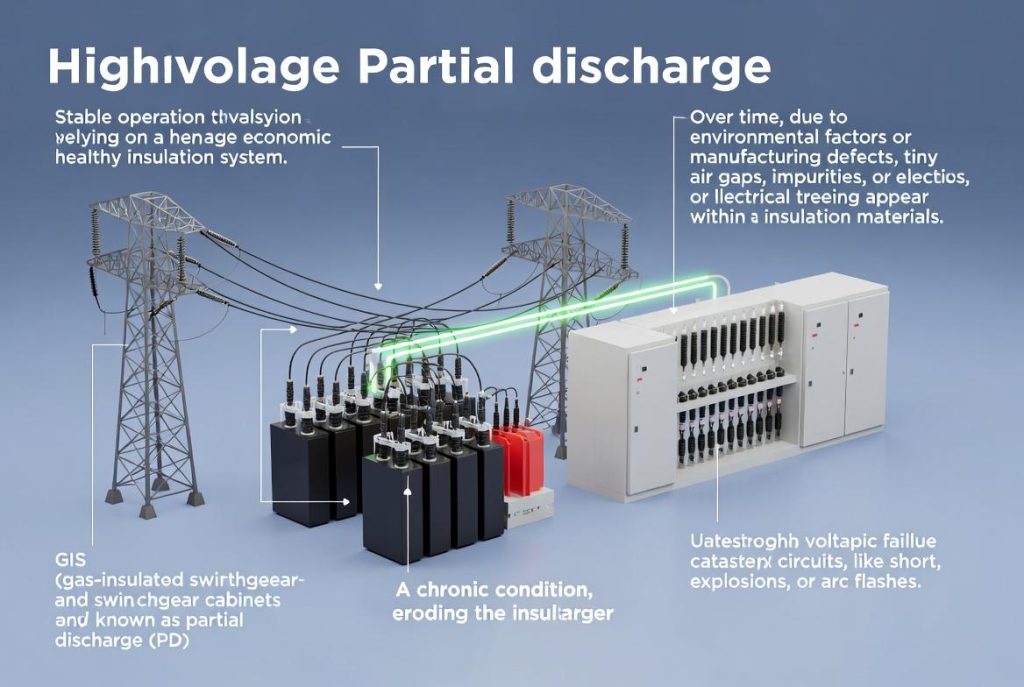
In mission-critical infrastructure like high-voltage (HV) cables, Gas Insulated Switchgear (GIS), and power transformers, the integrity of the insulation system is paramount. However, over time, voids, contaminants, or manufacturing defects within the insulation begin to break down under electrical stress. This process manifests as Partial Discharge (PD)—a localized dielectric breakdown that does not completely bridge the electrodes.
While seemingly minor, PD is the precursor to catastrophic failure. Each discharge event causes incremental damage, creating carbonized paths or “electrical trees” that slowly but surely erode the insulation. Ignoring PD is akin to ignoring a chronic disease; eventually, it leads to total insulation breakdown, resulting in major faults like short circuits, equipment explosions, and deadly arc flash incidents.
Shifting to Predictive Maintenance with PD Online Monitoring
Traditional methods of assessing insulation health, such as off-line testing, require system shutdown and are often non-continuous. This leaves critical assets vulnerable to failure between scheduled maintenance windows.
Partial Discharge Online Monitoring Systems represent the essential shift from reactive or preventive maintenance to truly predictive maintenance (PdM). These non-intrusive systems are installed directly on the operating equipment, providing a continuous, real-time “health check” without interrupting the power supply.
Core Benefits for Asset Managers:
- 24/7 Real-Time Data: Continuous monitoring ensures no critical PD event is missed, especially those that are load or temperature-dependent.
- Early Fault Warning: PD activity is often the first detectable symptom of insulation degradation, offering warning periods of months or even years before failure.
- Data-Driven Decisions: The system records PD magnitude, repetition rate, and phase, allowing engineers to trend the degradation and accurately forecast remaining useful life (RUL).
- Enhanced Safety: By identifying and resolving insulation defects before they escalate, the risk of high-energy faults like arc flash and fire is drastically reduced, protecting both personnel and public.

The Technology Behind the Watchdog
Modern PD online monitoring solutions utilize advanced sensor technology tailored to the specific HV asset:
| Asset Type | Primary Sensor Technology | Function |
| GIS & Switchgear | Ultra-High Frequency (UHF) Sensors | Detects electromagnetic waves generated by PD inside the enclosed, high-shielded environment. |
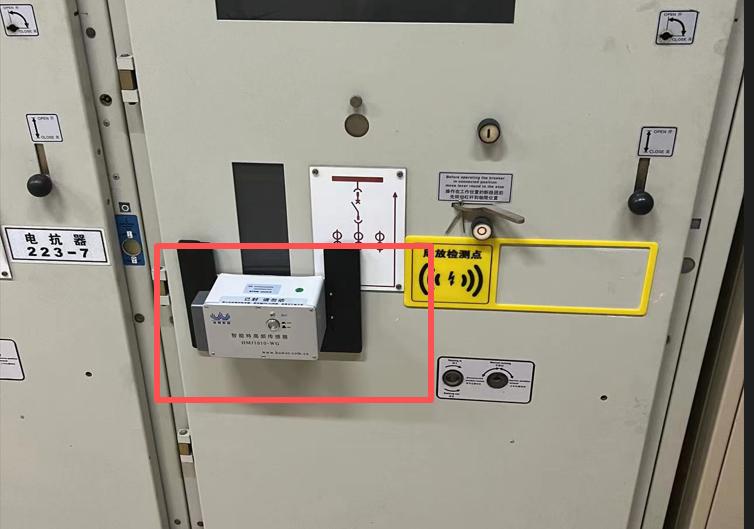
| Switchgear/Cabinets | Transient Earth Voltage (TEV) Sensors | Measures transient voltages coupled to the metal casing due to internal PD pulses. |
| Power Cables & Terminations | High-Frequency Current Transformers (HFCT) | Measures the current pulses traveling along the cable shield or grounding wire caused by PD. |
| General Fault Locating | Acoustic Emission (AE) Sensors | Detects ultrasonic sound waves generated by PD, crucial for pinpointing the exact location of the defect. |
Key Applications Across the Grid
The versatility of PD online monitoring makes it indispensable for managing the health of high-value assets:
- HV Cable Networks: Focuses on detecting faults in critical cable joints and terminations, which are often the weakest points in the system due to installation stress.
- Substation Switchgear & GIS: Essential for detecting internal metal particles, tracking defects in spacers, and monitoring for ingress of moisture.
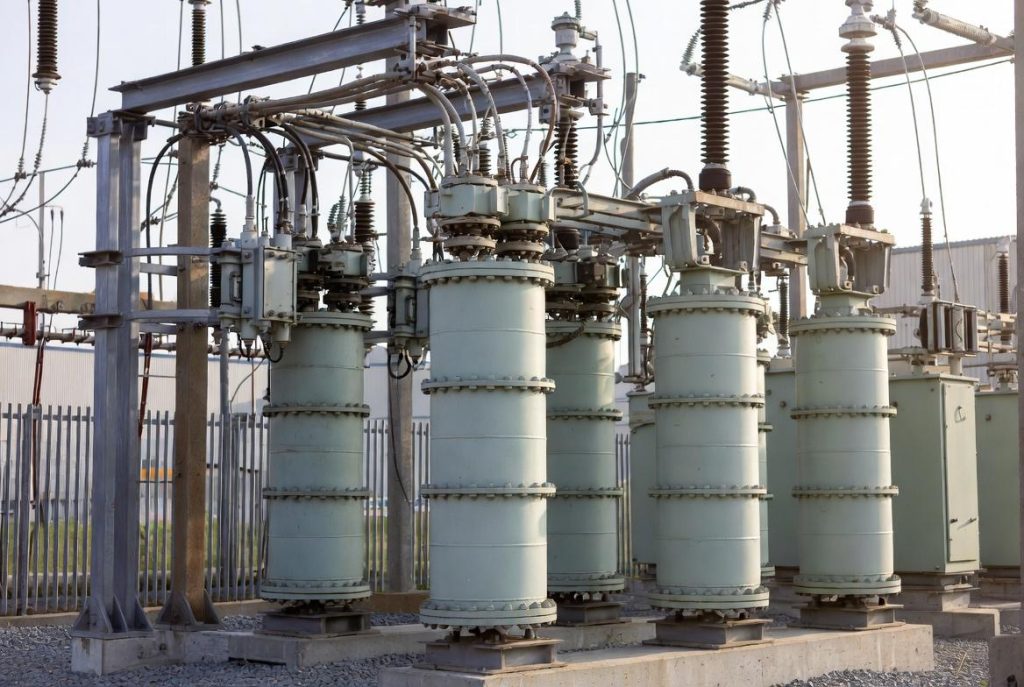
- Transformers & Bushings: Tracks PD generated by insulation paper degradation or oil contamination.
Conclusion: Reliability by Design
Implementing a robust Partial Discharge Online Monitoring System is a strategic investment in grid reliability and safety. It transforms maintenance from a costly, scheduled necessity into a data-driven, targeted process. By proactively monitoring the “silent killer”—PD—power utilities and industrial operators can significantly reduce non-scheduled outages, extend asset life, and ultimately ensure a safer, more resilient power network.