
Partial Discharge (PD) activity, often dubbed the “silent killer” of high-voltage (HV) assets, represents a critical phenomenon in electrical insulation systems. It is a localized dielectric breakdown of a small portion of an electrical insulation system under electrical stress, which does not completely bridge the electrodes. Instead, it occurs within voids, cracks, or interfaces within the insulation material, or on its surface, leading to gradual degradation and eventual failure of the equipment . Understanding and effectively managing PD activity is paramount for maintaining the reliability and longevity of HV infrastructure, ranging from power transformers and switchgear to cables and rotating machines.
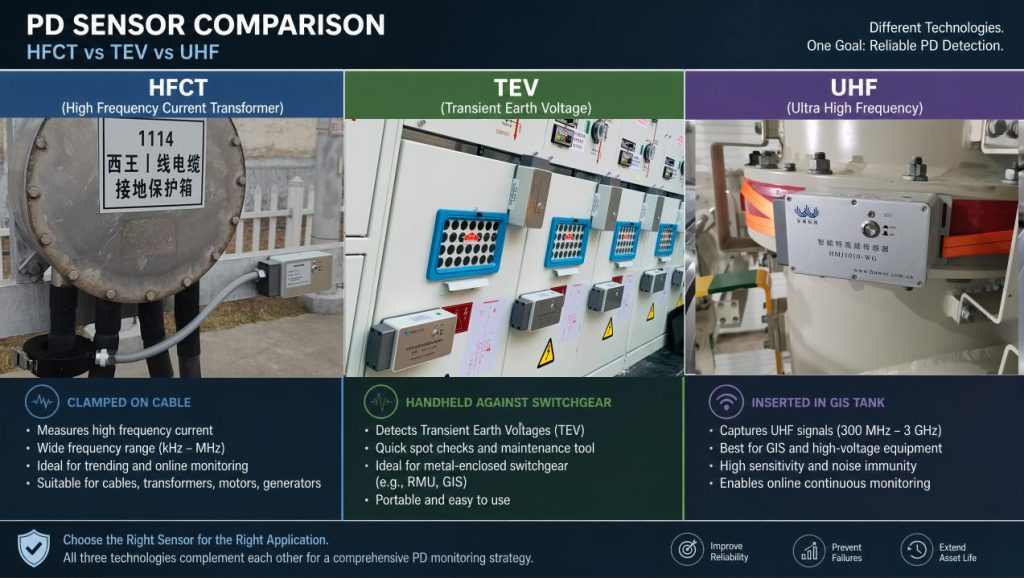
The Physics of Partial Discharge Activity
At its core, PD is a micro-discharge phenomenon. When an insulating material is subjected to an electric field, it experiences electrical stress. If this stress exceeds the dielectric strength of a localized region within or on the surface of the insulation, a partial discharge can occur. This breakdown is not a complete flashover between conductors but rather a localized event that releases a small amount of energy. This energy manifests as light, sound (acoustic emissions), heat, and electromagnetic radiation (radio frequency signals), all of which can be detected and analyzed to diagnose the health of the insulation system.
The repetitive nature of PD activity over time causes progressive damage to the insulation. Each discharge erodes a tiny portion of the material, creating carbonized paths, further voids, and eventually leading to a complete breakdown. The rate of degradation is influenced by factors such as the magnitude and frequency of the discharges, the type of insulating material, and environmental conditions like temperature and humidity.
Classification of Partial Discharge Types
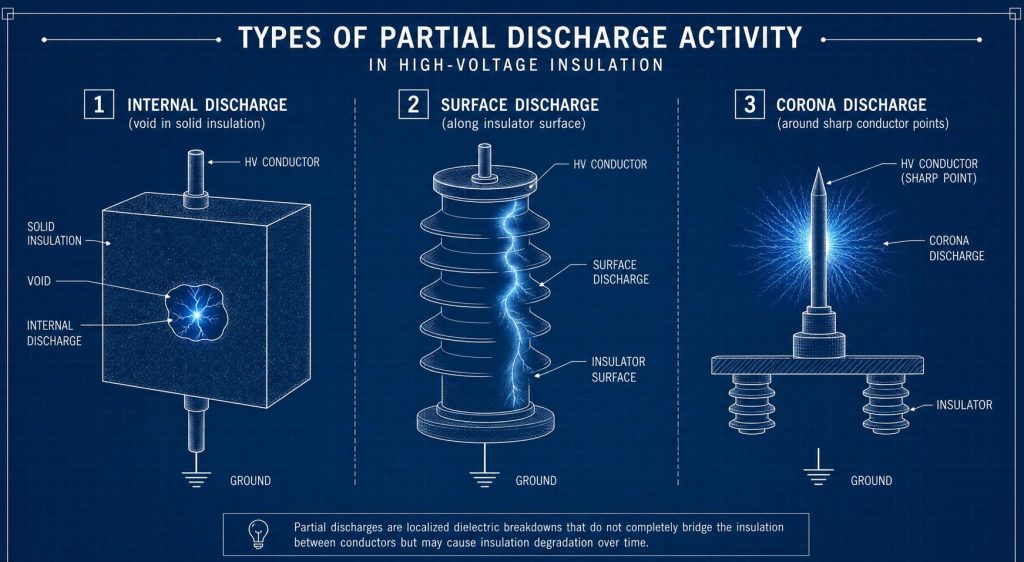
Partial discharge activity is broadly classified into several types, each with distinct characteristics and implications for insulation health. Recognizing these types is crucial for accurate diagnosis and effective mitigation strategies.
1. Internal Discharges
Internal discharges occur within voids or cavities embedded within solid or liquid insulating materials. These voids can be formed during manufacturing processes, due to thermal expansion and contraction, or as a result of aging. When the electric field across a void is higher than its breakdown strength, a discharge occurs within the gas-filled cavity. Internal discharges are particularly insidious as they are often not visible externally and can lead to significant internal degradation over time. They are a common cause of failure in power transformers and cables.
2. Surface Discharges
Surface discharges occur along the surface of an insulating material, typically at interfaces between different insulating media or between an insulator and a conductor. These discharges are often initiated by contamination, moisture, or surface irregularities that distort the electric field. Creepage discharge is a common form of surface discharge, where discharges propagate along the surface of an insulator. They can lead to tracking and flashover, especially in outdoor environments or in equipment exposed to pollutants.
3. Corona Discharges
Corona discharges occur in gaseous dielectrics, typically around sharp points or edges of conductors in air or other gases, where the electric field intensity is high enough to ionize the surrounding gas but not sufficient to cause a complete breakdown. Corona is often visible as a faint glow and audible as a hissing sound. While corona in air is generally less damaging than internal or surface discharges to solid insulation, it can produce ozone and nitric acid, which can accelerate the degradation of nearby insulating materials. In gas-insulated switchgear (GIS), corona can indicate issues with conductor surfaces or particles.
4. Electrical Treeing
Electrical treeing is a progressive breakdown phenomenon characterized by the formation of tree-like channels within solid insulation. It is often initiated by high electrical stress concentrations at defects, such as inclusions or voids, and is exacerbated by PD activity. These channels, once formed, provide pathways for further discharges, eventually leading to complete insulation failure. Treeing is a slow process but is a significant concern in polymeric insulation, such as that used in HV cables.
Impact on Asset Lifecycle
The presence of partial discharge activity significantly impacts the operational lifespan and reliability of HV assets. Initially, PD may cause minor, localized damage. However, if left unchecked, this damage accumulates, leading to a cascade of detrimental effects:
- Insulation Degradation: PD erodes insulating materials, reducing their dielectric strength and mechanical integrity.
- Thermal Stress: Discharges generate localized heat, contributing to thermal aging of insulation.
- Chemical Byproducts: PD can produce corrosive gases (e.g., ozone, nitrogen oxides) that further attack insulation.
- Mechanical Stress: The rapid expansion and contraction of gas during discharges can induce mechanical stress, leading to crack propagation.
- Catastrophic Failure: Ultimately, sustained PD activity can lead to complete insulation breakdown, resulting in equipment failure, costly outages, and potential safety hazards.
Conclusion: The Shift from Reactive to Proactive Monitoring
Historically, maintenance strategies for HV assets were often reactive, addressing failures after they occurred. However, the critical role of PD activity as a precursor to insulation failure has driven a significant shift towards proactive and predictive maintenance approaches. Modern PD monitoring systems, employing advanced sensors and data analytics, enable engineers to detect, locate, and characterize PD activity in its incipient stages. This allows for timely intervention, preventing catastrophic failures, extending asset life, and optimizing maintenance schedules. By embracing comprehensive PD monitoring, HV engineers can transition from merely reacting to failures to proactively ensuring the health and reliability of their electrical infrastructure.