
High-voltage power cables are among the most critical assets in modern electrical networks. Whether installed in urban distribution systems, industrial facilities, renewable energy plants, or utility substations, cable failures can result in costly outages and safety risks.
One of the most effective methods for evaluating cable insulation health is partial discharge cable testing. By identifying early-stage insulation defects before they develop into major failures, utilities and maintenance teams can significantly improve system reliability and reduce maintenance costs.
What Is Partial Discharge in Power Cables?
Partial discharge (PD) is a localized electrical discharge that occurs when insulation begins to deteriorate. Unlike a complete insulation breakdown, PD only affects a small portion of the insulation system.
Common causes include:
- Voids inside insulation materials
- Moisture ingress
- Cable joint defects
- Surface contamination
- Manufacturing imperfections
- Aging insulation systems
Although each discharge event may be small, repeated PD activity gradually damages the insulation and can eventually lead to catastrophic cable failure.
Why Partial Discharge Cable Testing Matters
Traditional cable testing methods often identify problems only after significant insulation degradation has already occurred.
Partial discharge testing provides several advantages:
- Early detection of insulation defects
- Reduced risk of unexpected outages
- Improved asset management decisions
- Lower maintenance and replacement costs
- Increased operational safety
For critical power infrastructure, PD testing has become an essential component of condition-based maintenance programs.
HFCT Technology for Cable Partial Discharge Testing
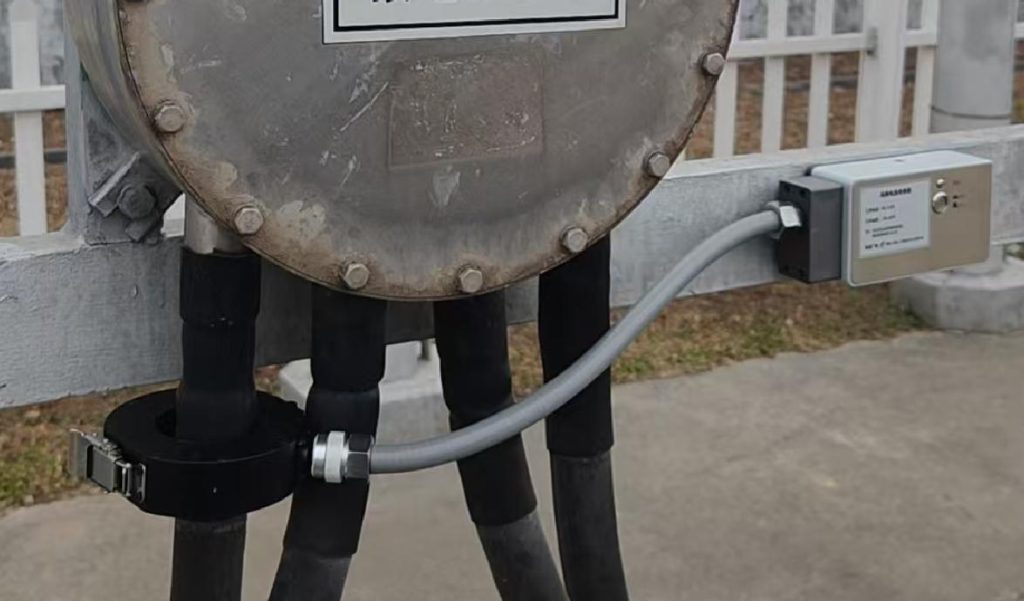
One of the most widely used techniques for online PD monitoring is the High Frequency Current Transformer (HFCT) method.
HFCT sensors are installed around cable grounding conductors or cable joints without requiring direct electrical contact with the high-voltage conductor.
When a partial discharge occurs inside the cable insulation, high-frequency current pulses travel along the cable system and grounding path. HFCT sensors capture these signals and convert them into measurable data for analysis.
Key advantages of HFCT monitoring include:
- Non-intrusive installation
- Online monitoring without power interruption
- High sensitivity to PD activity
- Suitable for cable joints and terminations
- Easy integration into remote monitoring systems
Detecting Defects in Cable Joints
Field experience shows that cable accessories such as joints and terminations are often the weakest points within a cable network.
Poor workmanship, insulation contamination, or mechanical stress during installation can create conditions that lead to partial discharge activity.
By continuously monitoring PD signals around cable joints, maintenance teams can identify:
- Corona discharge
- Surface discharge
- Internal insulation discharge
- Degrading cable accessories
This enables corrective action before the defect develops into a service-affecting failure.
Online Monitoring vs. Periodic Testing
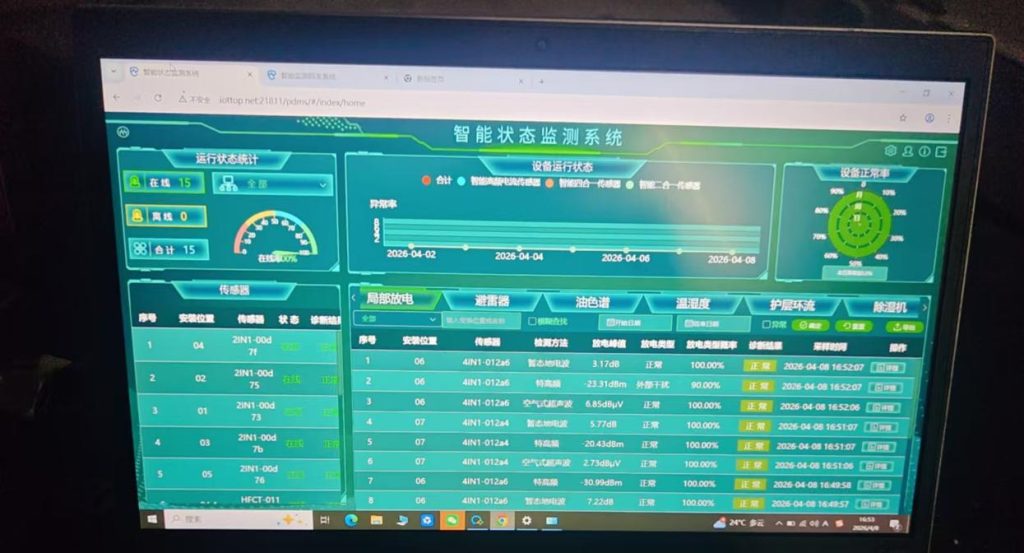
Traditional offline testing requires taking cables out of service, which may not always be practical for critical installations.
Online partial discharge monitoring offers several operational benefits:
| Online Monitoring | Offline Testing |
| Continuous monitoring | Periodic inspection |
| No service interruption | Requires shutdown |
| Real-time alarms | Limited testing intervals |
| Trend analysis available | Snapshot results only |
| Supports predictive maintenance | Mainly diagnostic |
As utilities move toward smart grid operations, online monitoring is becoming increasingly important.
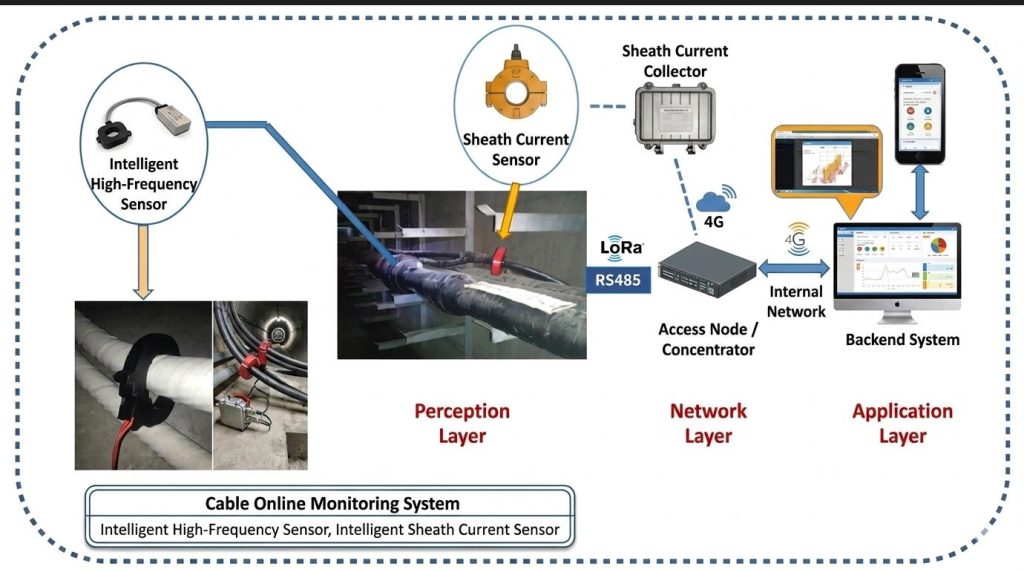
Integrating PD Monitoring with Cable Condition Assessment
Modern cable monitoring systems combine partial discharge measurements with other diagnostic data sources.
Examples include:
- Cable sheath current monitoring
- Temperature monitoring
- Environmental monitoring
- Historical fault analysis
When multiple data streams are analyzed together, engineers gain a more comprehensive understanding of cable health and can prioritize maintenance resources more effectively.
Applications of Partial Discharge Cable Testing
Partial discharge monitoring is widely used in:
- High-voltage transmission cables
- Underground cable tunnels
- Urban distribution networks
- Offshore wind farms
- Solar power plants
- Industrial power systems
- Utility substations
These environments often contain critical cable assets where early fault detection is essential.
Conclusion
Partial discharge cable testing has become one of the most valuable tools for assessing the condition of high-voltage cable systems. Technologies such as HFCT-based monitoring allow utilities and industrial operators to detect insulation defects at an early stage, reducing the risk of unexpected failures and extending asset life.
As power networks continue to modernize, combining online partial discharge monitoring with intelligent data analysis will play an increasingly important role in predictive maintenance and reliable grid operation.