
In modern electrical power systems, switchgear plays a critical role in controlling, protecting, and isolating electrical equipment. However, insulation degradation in high-voltage and medium-voltage switchgear can lead to partial discharges (PD), which are early warning signs of potential failures. Partial discharge sensors for switchgear provide a non-intrusive, real-time solution for online monitoring, helping utilities and industries prevent outages, extend equipment life, and ensure operational safety.
This article explores the principles behind various partial discharge detection methods in switchgear, their comprehensive applications, and the benefits of implementing advanced PD sensor technologies—drawing insights from established research on online monitoring systems.
What is Partial Discharge in Switchgear?
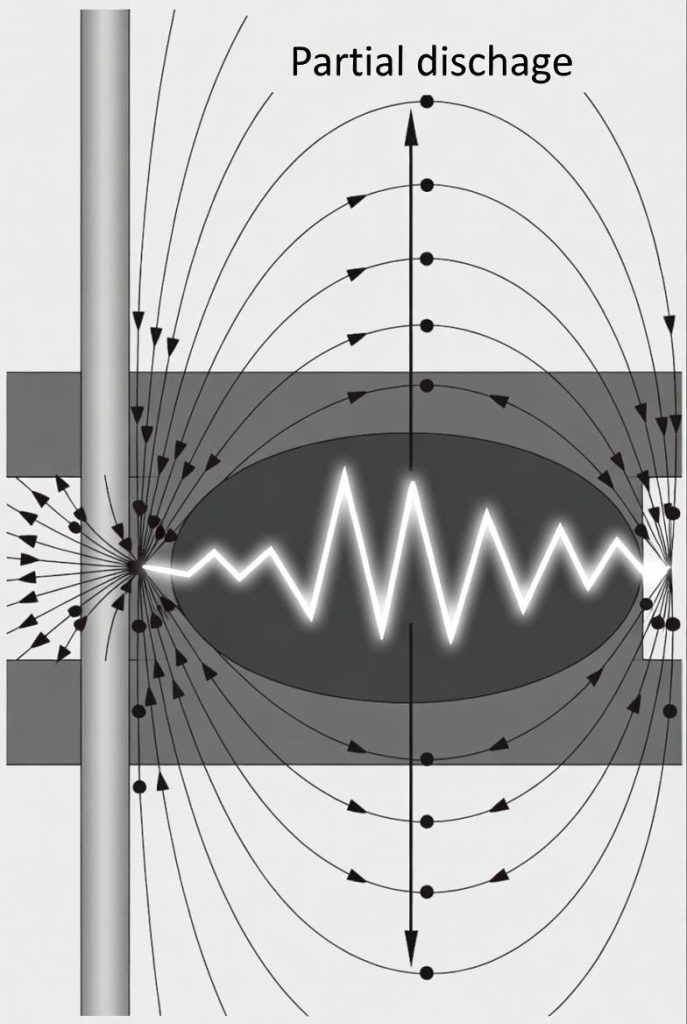
Partial discharge (PD) is a localized dielectric breakdown that occurs in small portions of the insulation system under high voltage stress. It does not fully bridge the conductors but can erode insulation over time through chemical, thermal, and mechanical degradation. In switchgear, PD often originates from voids, cracks, contamination, or manufacturing defects in insulators, busbars, or cable terminations.
Left undetected, PD activity accelerates insulation breakdown, potentially leading to catastrophic arc flashes, equipment damage, or power interruptions. Online monitoring with partial discharge sensors allows continuous assessment while the system remains energized, offering a proactive maintenance strategy.
Key Principles of Partial Discharge Detection Methods for Switchgear
Various sensing technologies detect the physical phenomena accompanying PD, such as electrical pulses, electromagnetic waves, ultrasonic sounds, and transient earth voltages. Common methods discussed in literature on switchgear PD online monitoring include:
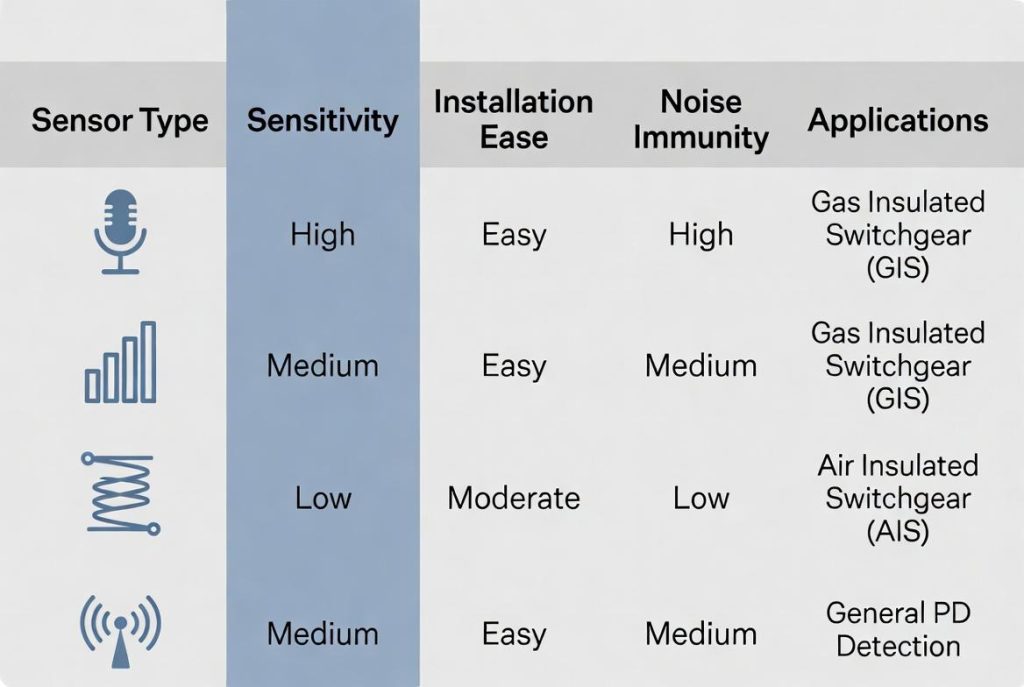
- Ultra High Frequency (UHF) Method PD generates electromagnetic waves in the UHF range (300 MHz–3 GHz). UHF sensors (often installed inside or on switchgear compartments) offer high sensitivity and good noise immunity, ideal for GIS (Gas Insulated Switchgear) and AIS (Air Insulated Switchgear). They enable precise localization and continuous online monitoring.
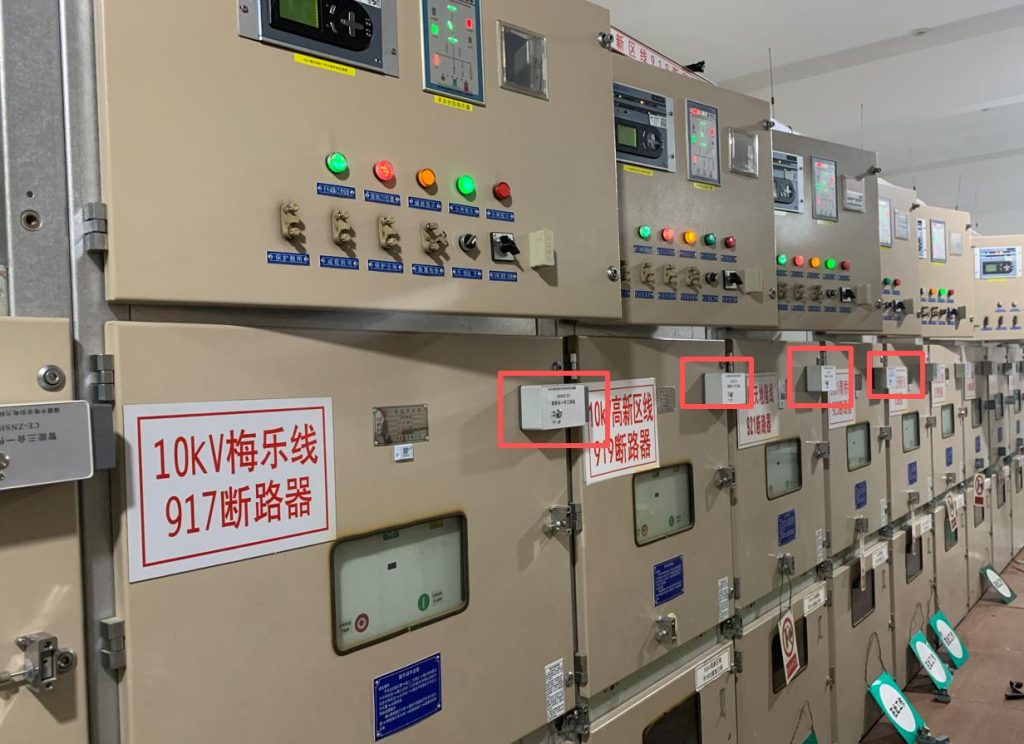
- Transient Earth Voltage (TEV) Sensors TEV sensors detect high-frequency voltage pulses on the grounded metal surfaces of switchgear enclosures. Non-intrusive and easy to retrofit with magnetic mounting, TEV is widely used for periodic surveys and permanent monitoring of medium-voltage switchgear.
- High Frequency Current Transformer (HFCT) HFCT sensors clamp around grounding cables or sheaths to capture PD current pulses. Excellent for quantifying severity (e.g., via burst interval analysis) and distinguishing internal vs. external PD.
- Acoustic / Ultrasonic Methods PD produces audible and ultrasonic emissions. Acoustic emission (AE) sensors placed on enclosures help locate sources when combined with electrical methods for comprehensive diagnostics.
- Comprehensive Multi-Sensor Systems Modern solutions integrate UHF, TEV, HFCT, and temperature sensors for holistic monitoring. IoT-enabled systems provide remote data analytics, phase-resolved PD patterns (PRPD), and predictive alerts.
Comprehensive Applications of PD Online Monitoring in Switchgear
According to studies on switchgear PD monitoring, integrating multiple detection principles yields superior results:
- Early Fault Detection: Identifies insulation issues before they escalate.
- Condition-Based Maintenance: Moves from time-based to predictive strategies, reducing unnecessary outages.
- Risk Assessment: PRPD patterns and trend analysis help classify defect severity (e.g., corona, surface discharge, internal voids).
- Retrofit and New Installations: Sensors suit both legacy air-insulated and modern gas-insulated switchgear.
- Integration with SCADA/IoT: Real-time dashboards, alarms, and cloud analytics for remote management.
Industries such as utilities, data centers, oil & gas, and manufacturing benefit significantly from these systems, as switchgear failures can cause millions in downtime.
Benefits of Implementing Partial Discharge Sensors
- Enhanced Safety: Reduces arc flash risks.
- Cost Savings: Prevents unplanned outages and extends asset lifespan.
- Compliance: Supports standards like IEC 62478 for electromagnetic and acoustic PD measurement.
- Non-Intrusive Operation: Monitoring occurs without de-energizing equipment.
Choosing the Right Partial Discharge Sensor Solution
When selecting a system, consider:
- Switchgear type (AIS vs. GIS)
- Required sensitivity and frequency range
- Installation constraints (permanent vs. portable)
- Data analysis capabilities and integration options
Reputable solutions often combine multiple sensor types for robust, interference-resistant performance in noisy substation environments.
Conclusion: Invest in PD Monitoring for Future-Proof Switchgear
Partial discharge sensors are indispensable for reliable switchgear operation. By leveraging the principles and comprehensive applications outlined in technical literature, operators can achieve superior insulation diagnostics and asset management. Implementing online PD monitoring today protects your power infrastructure tomorrow.
For tailored solutions or expert consultation on partial discharge sensor switchgear systems, contact specialized providers offering UHF, TEV, and multi-method platforms.